
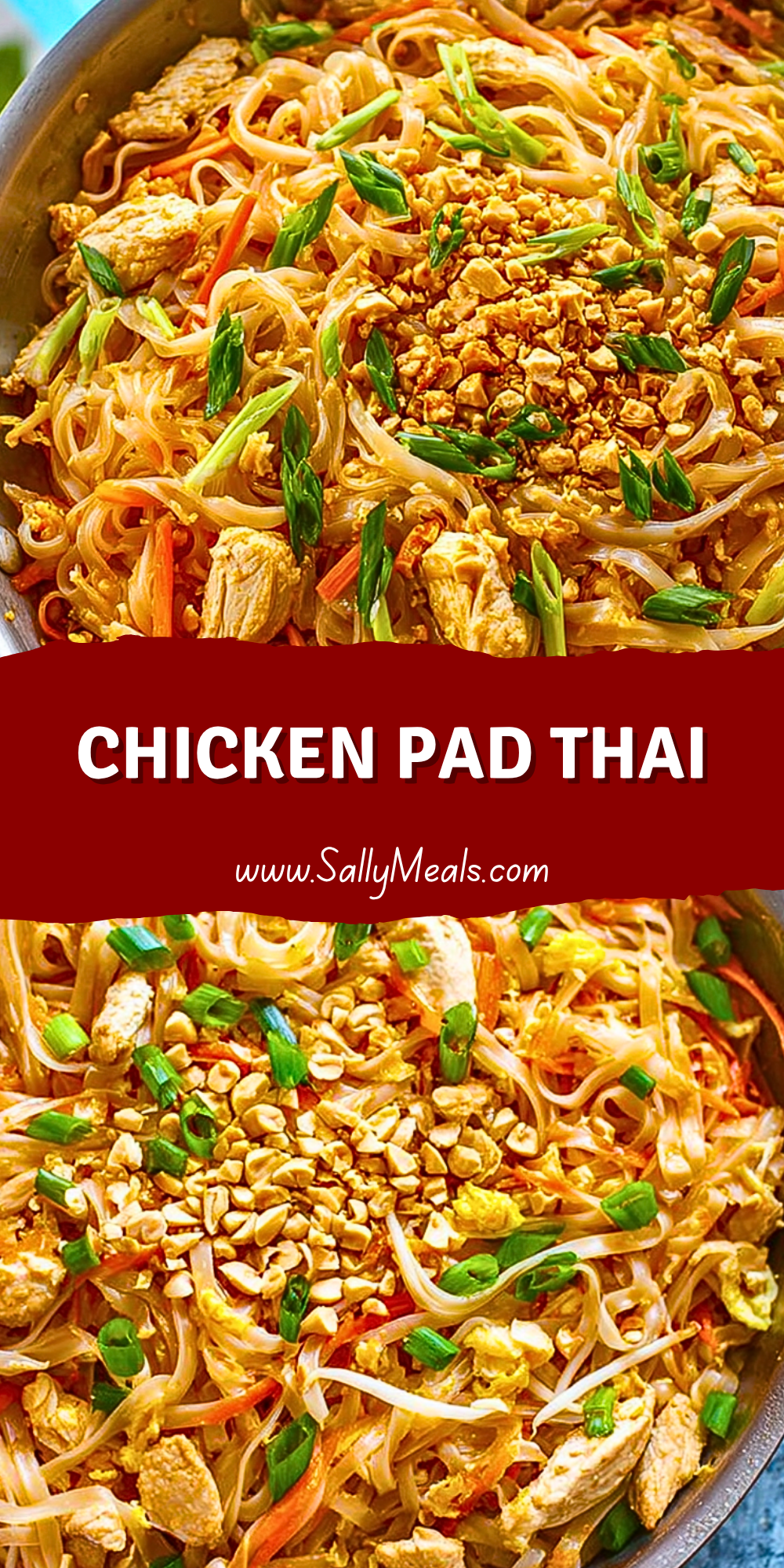
Chicken Pad Thai has always been one of those meals I crave when I want something comforting, flavorful, and satisfying all at once. The combination of tender chicken, chewy rice noodles, crunchy vegetables, and the perfect balance of sweet, salty, tangy sauce makes every bite unforgettable. I love how this dish comes together quickly while still tasting like something you’d order from your favorite Thai restaurant.
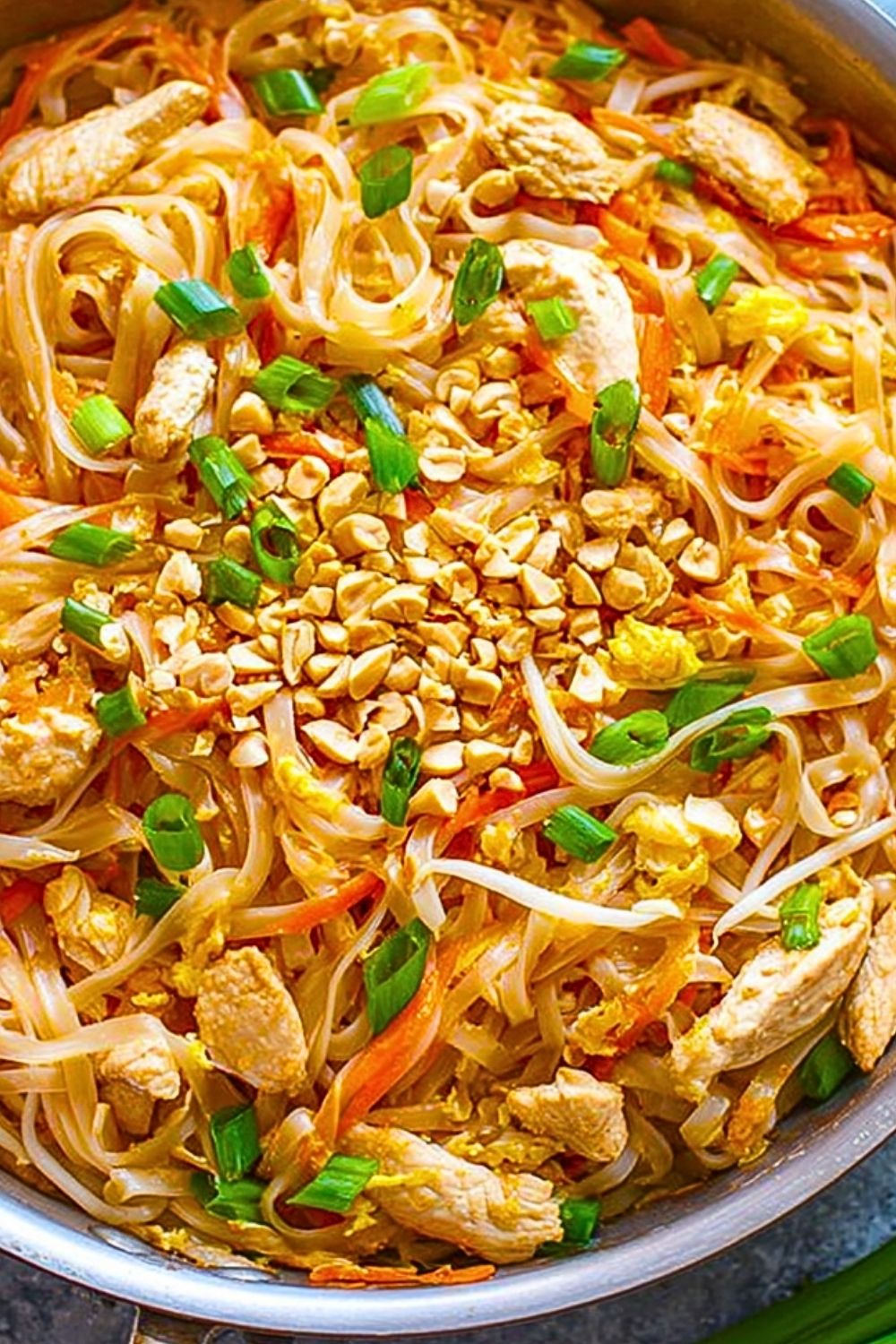
What makes Chicken Pad Thai even better is how versatile it is. Whether I’m making it for a busy weeknight dinner or serving it to friends for a casual gathering, it never disappoints. The fresh toppings like chopped peanuts, green onions, and lime wedges add layers of texture and brightness that truly bring the whole dish to life.
Why You’ll Love This Chicken Pad Thai
Chicken Pad Thai is packed with bold flavors that perfectly balance sweet, savory, and tangy notes. Every forkful delivers tender chicken, silky noodles, and crisp vegetables coated in a rich homemade sauce.
Another reason to love this dish is how quickly it cooks. Once the ingredients are prepped, everything comes together in a single pan in under 30 minutes, making it ideal for busy evenings.
It’s also highly customizable. You can adjust the spice level, swap vegetables, or even use different proteins depending on what you have in your kitchen.
Finally, Chicken Pad Thai feels both comforting and fresh at the same time. The bright lime juice, crunchy peanuts, and fresh green onions keep the dish vibrant and exciting.
What Kind of Noodles Should I Use for Chicken Pad Thai?
Traditional Chicken Pad Thai is made with flat rice noodles, which give the dish its signature chewy texture. Medium-width rice noodles are usually the best choice because they absorb the sauce beautifully without becoming too soft.
I prefer using dried rice noodles because they’re easy to store and cook quickly after soaking. Fresh rice noodles can also work well, but they tend to be softer and may require more careful handling during stir-frying.
If rice noodles aren’t available, you can substitute with linguine or fettuccine in a pinch. While the flavor won’t be exactly the same, the dish will still be delicious and satisfying.
Options for Substitutions
Chicken thighs can easily replace chicken breast if you prefer a juicier and more flavorful protein. Shrimp, tofu, or thinly sliced beef also work wonderfully in this recipe.
For the vegetables, shredded cabbage, bell peppers, bean sprouts, or snap peas can all be added depending on your preferences. This recipe adapts well to whatever fresh produce you have on hand.
If you need a gluten-free option, make sure to use gluten-free soy sauce or tamari. Most rice noodles are naturally gluten-free, making this dish simple to adjust.
Peanut allergies can be accommodated by using chopped cashews or sunflower seeds instead of peanuts. They still provide a delicious crunch without changing the dish too much.
You can also control the sweetness and spice level by adjusting the brown sugar and chili sauce in the Pad Thai sauce. That flexibility makes it easy to create a version that suits your taste perfectly.
Ingredients for This Chicken Pad Thai
Rice Noodles
Rice noodles are the heart of Chicken Pad Thai and give the dish its signature chewy texture. They absorb the flavorful sauce beautifully while staying light and satisfying.
Chicken Breast
Chicken breast adds lean protein and a tender bite to the dish. Thinly sliced chicken cooks quickly and blends perfectly with the noodles and sauce.
Eggs
Eggs create richness and add a soft texture that balances the noodles. They also help bring the ingredients together during stir-frying.
Carrots
Shredded carrots provide natural sweetness, vibrant color, and a slight crunch that keeps the dish fresh and balanced.
Green Onions
Green onions add brightness and a mild onion flavor that complements the savory sauce. They are used both during cooking and as a garnish.
Bean Sprouts
Bean sprouts give Chicken Pad Thai its classic freshness and crisp texture. They lighten the dish and create a refreshing contrast to the warm noodles.
Garlic
Fresh garlic brings bold aromatic flavor and depth to the stir-fry. It forms the savory foundation of the dish.
Soy Sauce
Soy sauce adds salty umami flavor that enhances every ingredient. It helps create the rich and balanced Pad Thai sauce.
Fish Sauce
Fish sauce provides authentic Thai flavor with its deep savory notes. Even a small amount dramatically improves the overall taste.
Brown Sugar
Brown sugar balances the salty and tangy ingredients while giving the sauce its signature subtle sweetness.
Lime Juice
Fresh lime juice adds acidity and brightness that keeps the dish from feeling heavy. It also enhances the fresh flavors of the vegetables and herbs.
Peanut Butter
Peanut butter helps create a silky sauce with rich nutty flavor. It gives the noodles a smooth coating and extra depth.
Chili Sauce
Chili sauce adds gentle heat and a touch of sweetness. The amount can easily be adjusted based on personal spice preference.
Vegetable Oil
Vegetable oil is essential for stir-frying because it handles high heat well and prevents sticking.
Crushed Peanuts
Crushed peanuts add crunch and a classic nutty topping that contrasts beautifully with the soft noodles.
Fresh Cilantro
Cilantro brings freshness and herbal flavor that brightens the entire dish before serving.
Lime Wedges
Lime wedges served on the side allow everyone to add extra citrus flavor right before eating.
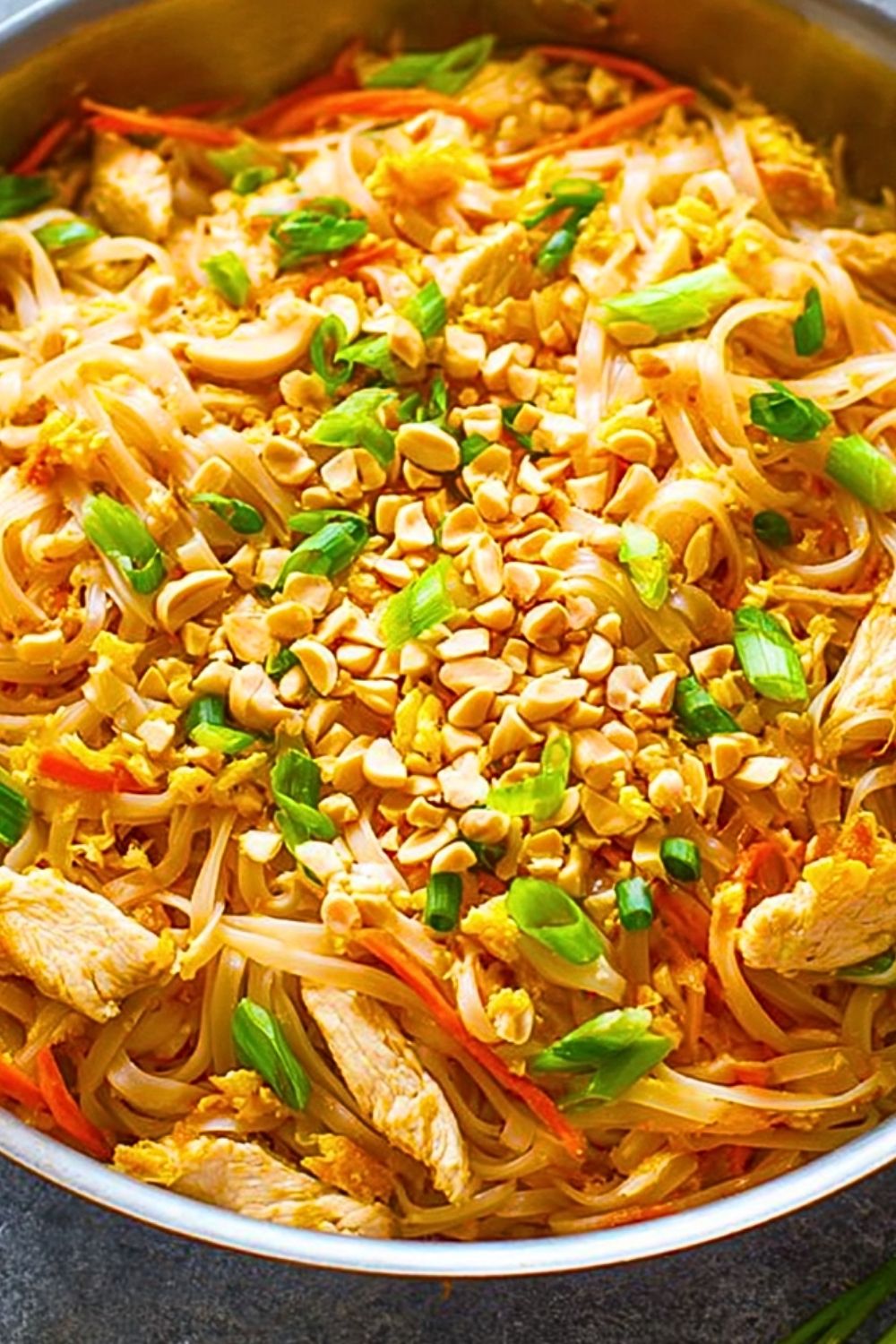
Step 1: Prepare the Rice Noodles
Begin by soaking the rice noodles according to the package instructions. Most dried rice noodles need to soak in warm water until they become flexible but still slightly firm.
Avoid over-soaking because the noodles will continue cooking in the pan later. Once softened, drain them thoroughly and set aside.
Preparing the noodles correctly is one of the most important parts of making great Chicken Pad Thai. Properly soaked noodles stay chewy instead of becoming mushy.
Step 2: Prepare the Chicken
Slice the chicken breast into thin strips so it cooks quickly and evenly. Pat the chicken dry with paper towels to help it brown properly during cooking.
Season the chicken lightly with salt and pepper if desired. Keeping the seasoning simple allows the Pad Thai sauce to remain the star of the dish.
Having the chicken fully prepared before heating the pan helps the cooking process move smoothly because stir-frying happens quickly.
Step 3: Mix the Pad Thai Sauce
In a bowl, combine soy sauce, fish sauce, brown sugar, lime juice, peanut butter, and chili sauce. Whisk everything together until smooth.
The sauce should taste balanced between salty, sweet, tangy, and slightly spicy. Adjust the flavors if necessary by adding more lime juice for brightness or more sugar for sweetness.
Preparing the sauce ahead of time ensures it can be added quickly once the stir-frying begins.
Step 4: Cook the Chicken
Heat vegetable oil in a large skillet or wok over medium-high heat. Once the pan is hot, add the chicken in a single layer.
Allow the chicken to cook without moving it too much at first so it develops light golden color. Stir occasionally until fully cooked through.
Cooking the chicken separately first helps maintain its juicy texture and prevents overcrowding in the pan.
Step 5: Sauté the Garlic and Vegetables
Add garlic to the pan and cook briefly until fragrant. Stir constantly because garlic cooks quickly and can burn easily.
Add the carrots and cook for a few minutes until slightly softened while still maintaining some crunch. Then add the bean sprouts and part of the green onions.
The vegetables should stay vibrant and crisp to provide texture contrast in the final dish.
Step 6: Scramble the Eggs
Push the chicken and vegetables to one side of the pan. Crack the eggs directly into the empty side and gently scramble them.
Cook the eggs until just set before mixing them into the rest of the ingredients. Soft scrambled eggs blend beautifully into the noodles.
This method keeps the eggs tender and prevents them from overcooking.
Step 7: Add the Noodles
Place the soaked rice noodles into the skillet and gently toss them with the chicken, eggs, and vegetables.
Using tongs works especially well for separating and coating the noodles evenly. Keep tossing gently to avoid breaking the noodles.
At this point, the dish starts taking on the classic appearance and texture of authentic Chicken Pad Thai.
Step 8: Pour in the Sauce
Pour the prepared Pad Thai sauce over the noodles and toss continuously so every strand becomes coated.
Allow the noodles to cook in the sauce for several minutes. As the sauce thickens slightly, it clings to the noodles and creates deep flavor throughout the dish.
If the noodles seem too dry, add a splash of water to loosen everything while continuing to stir.
Step 9: Finish with Fresh Toppings
Remove the pan from the heat and sprinkle the Chicken Pad Thai with crushed peanuts, remaining green onions, and fresh cilantro.
Serve immediately with lime wedges on the side for extra brightness. A final squeeze of lime juice right before eating enhances all the flavors.
The combination of warm noodles, crunchy peanuts, fresh herbs, and citrus creates the perfect final balance.
Step 10: Serve and Enjoy
Chicken Pad Thai is best enjoyed fresh while the noodles are still warm and the vegetables remain crisp.
Serve it as a complete meal on its own or pair it with Thai-inspired appetizers for a more elaborate dinner.
Every bite delivers savory chicken, silky noodles, fresh vegetables, and a flavorful sauce that makes this dish unforgettable.
How Long to Prepare Chicken Pad Thai
Chicken Pad Thai is one of those meals that feels impressive while actually coming together surprisingly quickly. Most of the preparation time goes into slicing the vegetables, preparing the chicken, and soaking the noodles. Once everything is ready, the cooking process moves very fast because stir-frying happens over high heat.
On average, preparing all the ingredients takes about 20 minutes. This includes soaking the noodles, mixing the sauce, chopping vegetables, and slicing the chicken into thin strips.
The actual cooking time is usually around 15 minutes. Since the ingredients cook quickly in a hot skillet or wok, it is important to have everything prepared before starting.
Altogether, Chicken Pad Thai can easily be made in about 35 minutes from start to finish, making it a perfect option for busy weeknights when you still want a homemade meal packed with flavor.
Preparation Time
Preparing the ingredients ahead of time helps the entire cooking process feel smooth and stress-free. Having the sauce mixed and vegetables chopped before heating the pan is especially helpful.
Cooking Time
The stir-frying portion cooks rapidly over medium-high heat. Because the noodles and vegetables only need a few minutes in the pan, the dish comes together much faster than many other noodle recipes.
Total Time
From prep to serving, Chicken Pad Thai usually takes between 30 and 40 minutes, depending on your chopping speed and familiarity with stir-frying.
Tips for Perfect Chicken Pad Thai
Using the correct noodles makes a huge difference in texture. Rice noodles should be softened but still slightly firm before going into the pan. Over-soaked noodles tend to become mushy during cooking.
Cooking over high heat helps achieve authentic stir-fried flavor. A hot skillet or wok allows the ingredients to cook quickly while keeping the vegetables crisp and fresh.
It is best to prepare all ingredients before starting to cook. Stir-frying moves quickly, so having everything ready prevents overcooking.
Avoid overcrowding the pan because too many ingredients at once can cause steaming instead of stir-frying. If necessary, cook the chicken in batches.
Fresh lime juice added at the end brightens the entire dish and balances the rich savory flavors.
Toppings like chopped peanuts, cilantro, and green onions should always be added just before serving to maintain freshness and crunch.
Taste the sauce before adding it to the pan. Adjusting sweetness, saltiness, or spice early ensures the final dish matches your personal preferences.
Watch Out for These Mistakes While Cooking
One of the most common mistakes is overcooking the rice noodles. Soft noodles can quickly turn sticky and fall apart during stir-frying.
Using low heat may prevent proper caramelization and reduce flavor depth. Stir-fried dishes develop their signature taste when cooked quickly at higher temperatures.
Adding too much sauce can make the noodles soggy instead of lightly coated. The sauce should enhance the noodles without drowning them.
Skipping ingredient preparation before cooking often leads to uneven cooking because stir-frying moves too quickly to stop and chop ingredients midway.
Burning the garlic is another common issue. Garlic cooks very fast, so it should only be sautéed briefly until fragrant.
Not draining the noodles properly can water down the sauce and prevent it from clinging to the noodles.
Using cold ingredients directly from the refrigerator may lower the pan temperature too much, affecting the overall texture of the dish.
What to Serve With Chicken Pad Thai?
Thai Spring Rolls
Crispy Thai spring rolls pair perfectly with Chicken Pad Thai because they add a crunchy appetizer that complements the soft noodles and savory sauce.
Thai Cucumber Salad
A light cucumber salad with vinegar, sugar, and fresh herbs adds refreshing contrast to the rich flavors of the noodles.
Coconut Soup
Creamy coconut soup creates a comforting combination alongside Chicken Pad Thai and balances the dish with its smooth texture.
Steamed Dumplings
Soft dumplings filled with vegetables or chicken make a delicious side dish that turns the meal into a complete Thai-inspired dinner.
Mango Sticky Rice
For dessert, mango sticky rice offers sweet tropical flavor that finishes the meal beautifully without feeling too heavy.
Storage Instructions
Chicken Pad Thai stores surprisingly well when handled properly. Allow the noodles to cool completely before transferring them into an airtight container.
Refrigerator Storage
Store leftovers in the refrigerator for up to 3 days. Keeping the noodles sealed tightly helps preserve freshness and prevents them from drying out.
Reheating Instructions
Reheat Chicken Pad Thai in a skillet over medium heat with a small splash of water. This helps loosen the noodles and restore their soft texture.
Microwaving also works for convenience, though reheating on the stove usually gives better texture.
Freezing Instructions
Freezing is possible, but the noodles may soften slightly after thawing. If freezing, store portions in freezer-safe containers for up to 2 months.
Best Storage Tip
Store toppings like peanuts, cilantro, and green onions separately whenever possible. Adding them fresh after reheating keeps the dish tasting vibrant.
Estimated Nutrition
The nutritional values for Chicken Pad Thai may vary depending on ingredient brands and portion sizes, but a typical serving provides a balanced combination of protein, carbohydrates, and healthy fats.
Estimated Per Serving
- Calories: 450–550
- Protein: 28g
- Carbohydrates: 50g
- Fat: 18g
- Fiber: 4g
- Sugar: 10g
- Sodium: 850mg
Chicken Pad Thai delivers satisfying energy from the rice noodles while the chicken adds lean protein. Vegetables contribute freshness, vitamins, and texture that balance the richness of the sauce.
Frequently Asked Questions
Can I Make Chicken Pad Thai Ahead of Time?
Yes, you can prepare the sauce and chop the vegetables ahead of time. The noodles are best cooked fresh, but leftovers also reheat well for quick meals.
Can I Use Another Protein Instead of Chicken?
Absolutely. Shrimp, tofu, beef, or even a combination of proteins work very well in Pad Thai.
Is Chicken Pad Thai Spicy?
Traditional Pad Thai usually has mild heat, but the spice level can easily be adjusted by increasing or reducing chili sauce.
Why Are My Noodles Mushy?
Mushy noodles are often caused by over-soaking or overcooking. Soaking them until just flexible helps maintain the correct texture.
Can I Make This Dish Gluten-Free?
Yes. Most rice noodles are naturally gluten-free, and using gluten-free soy sauce or tamari makes the recipe suitable for gluten-free diets.
Conclusion
Chicken Pad Thai is a flavorful and satisfying dish that combines tender chicken, chewy rice noodles, crisp vegetables, and a rich homemade sauce into one unforgettable meal. Its balance of sweet, savory, tangy, and nutty flavors makes it a favorite for both casual dinners and special occasions.
One of the best things about Chicken Pad Thai is how adaptable it is. Whether you prefer extra spice, different vegetables, or another protein, the recipe can easily be customized to suit your tastes.
With quick cooking time, vibrant ingredients, and restaurant-quality flavor, Chicken Pad Thai is a recipe worth making again and again. Every bowl delivers comfort, freshness, and bold flavor in the most delicious way.
Chicken Pad Thai
Ingredients
- 8 ounces rice noodles
- 2 tablespoons vegetable oil
- 1 pound chicken breast thinly sliced
- 3 cloves garlic minced
- 2 large eggs
- 1 cup shredded carrots
- 1 cup bean sprouts
- 4 green onions sliced
- 1/4 cup soy sauce
- 2 tablespoons fish sauce
- 3 tablespoons brown sugar
- 2 tablespoons lime juice
- 2 tablespoons peanut butter
- 1 tablespoon chili sauce
- 1/3 cup crushed peanuts
- 2 tablespoons chopped cilantro
- 1 lime cut into wedges
Instructions
- 1. Soak the rice noodles in warm water according to package instructions until slightly softened, then drain and set aside.
- 2. In a small bowl, whisk together soy sauce, fish sauce, brown sugar, lime juice, peanut butter, and chili sauce to make the Pad Thai sauce.
- 3. Heat vegetable oil in a large skillet or wok over medium-high heat.
- 4. Add the sliced chicken and cook until fully cooked and lightly golden.
- 5. Stir in the minced garlic and cook briefly until fragrant.
- 6. Add shredded carrots and cook for 2 minutes while stirring frequently.
- 7. Push the ingredients to one side of the skillet and scramble the eggs on the empty side until just set.
- 8. Add the soaked rice noodles, bean sprouts, and green onions to the skillet.
- 9. Pour the prepared sauce over the noodles and toss everything together until evenly coated and heated through.
- 10. Remove from heat and top with crushed peanuts and chopped cilantro.
- 11. Serve immediately with fresh lime wedges on the side.