
 Sally Thompson

A dish that looks like a celebration on a platter, Persian Jeweled Rice is an enchanting symphony of color, aroma, and taste. This luxurious rice dish is studded with glistening dried fruits, crunchy nuts, and fragrant spices, each element symbolizing prosperity and joy in Persian culture. Often served at weddings and festive gatherings, it’s not just food—it’s a statement of heritage and hospitality.
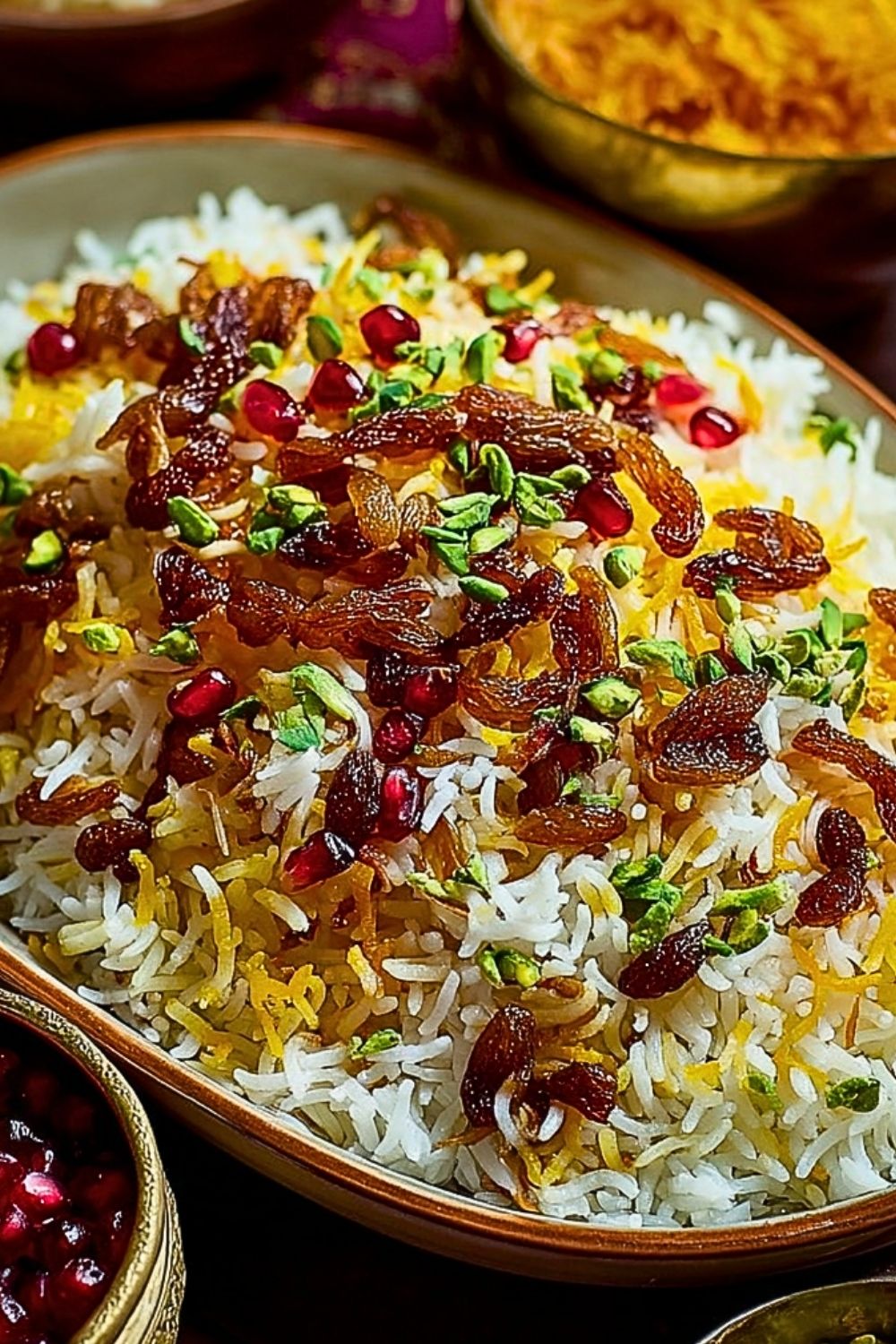
At first glance, Persian Jeweled Rice captivates with its golden saffron strands, ruby-red barberries or cranberries, emerald pistachios, and golden-orange slivers of dried apricots. But the real magic begins with the first bite: subtly sweet, warmly spiced, and perfectly fluffy rice that complements the soft chew of fruits and the crunch of toasted nuts. This dish transforms a simple grain into an opulent, unforgettable experience.
Why You’ll Love This Persian Jeweled Rice
This dish is an instant showstopper at any dinner table, making it perfect for holidays or dinner parties. Beyond its visual appeal, it balances savory and sweet beautifully. It’s gluten-free, vegetarian-friendly, and can be served as a main or side dish. The textures are vibrant, the flavors well-layered, and the aroma? Absolutely divine.
Preparation Phase & Tools to Use
To create Persian Jeweled Rice at its best, you’ll need a few essential tools:
- Heavy-bottom pot or nonstick saucepan: This prevents the rice from burning and ensures even cooking, especially important when creating the signature crispy tahdig (optional).
- Fine mesh strainer: For rinsing the rice thoroughly and draining it after parboiling.
- Mixing bowls: Helpful for prepping and soaking the dried fruits and saffron.
- Mortar and pestle or spice grinder: To grind saffron into a fine powder for maximum flavor and color.
- Wooden spoon or spatula: Gentle on the rice grains while mixing in delicate ingredients like fruits and nuts.
Preparation Tips
Use long-grain basmati rice for the fluffiest texture, and rinse it well until the water runs clear to remove excess starch. Soak the rice for at least 30 minutes before boiling to ensure even cooking. Toast the nuts lightly to bring out their aroma, and soak dried fruits briefly to plump them up. For the saffron infusion, grind it finely and steep in hot (not boiling) water to extract its full color and flavor. Layering is key—add the jeweled elements at the end to keep them vibrant and prevent overcooking.
Ingredients for this Persian Jeweled Rice
- 2 cups long-grain basmati rice
- 1/2 cup barberries or dried cranberries
- 1/2 cup slivered almonds
- 1/2 cup pistachios, roughly chopped
- 1/2 cup dried apricots, finely chopped
- 1/4 cup golden raisins
- 1 medium carrot, julienned (optional for extra color)
- 1 small onion, finely sliced (optional)
- 2 tbsp orange zest (fresh or candied peel)
- 1/2 tsp saffron threads, ground and steeped in 2 tbsp hot water
- 2 tbsp sugar (for barberries)
- 2 tbsp butter or ghee
- 1/4 cup neutral oil (vegetable, grapeseed, or sunflower)
- Salt, to taste
- Water, as needed for parboiling and steaming
Step 1: Prepare the Rice
Rinse the basmati rice under cold water until it runs clear, removing the excess starch. Soak the rice in water with a pinch of salt for 30–60 minutes. Bring a large pot of salted water to a boil, then add the soaked rice. Boil for 5–6 minutes until the rice is just al dente. Drain immediately using a fine mesh strainer and set aside.
Step 2: Toast the Nuts and Fruits
In a dry pan over medium heat, lightly toast the almonds and pistachios until fragrant and slightly golden. Remove and set aside. In the same pan, melt 1 tbsp of butter or ghee, then gently sauté the apricots, raisins, and orange zest for 1–2 minutes. Remove and reserve.
Step 3: Sauté the Barberries or Cranberries
Add the remaining 1 tbsp of butter or ghee to the pan and add the barberries or cranberries along with 2 tbsp of sugar. Cook on low heat for 2 minutes until the berries plump slightly and the sugar dissolves. Be careful not to burn them as they are delicate. Set aside.
Step 4: Optional Tahdig Layer
If you want the crispy rice bottom (tahdig), add 2 tbsp of oil to the bottom of a nonstick or heavy pot. Layer with thinly sliced potatoes or flatbread. This creates a delicious, golden crust.
Step 5: Layer the Rice
Spoon a layer of rice into the pot, followed by a sprinkle of the nut and fruit mixture, then more rice. Repeat the layering until all ingredients are used up, finishing with a rice layer on top. Reserve a portion of the nuts and fruits for garnish.
Step 6: Steam the Rice
Drizzle the saffron water over the top layer. Use the handle of a spoon to make a few holes down to the bottom of the pot to allow steam to rise. Cover the lid with a clean kitchen towel to trap moisture and place it tightly on the pot. Steam the rice over low heat for 30–40 minutes.
Step 7: Garnish and Serve
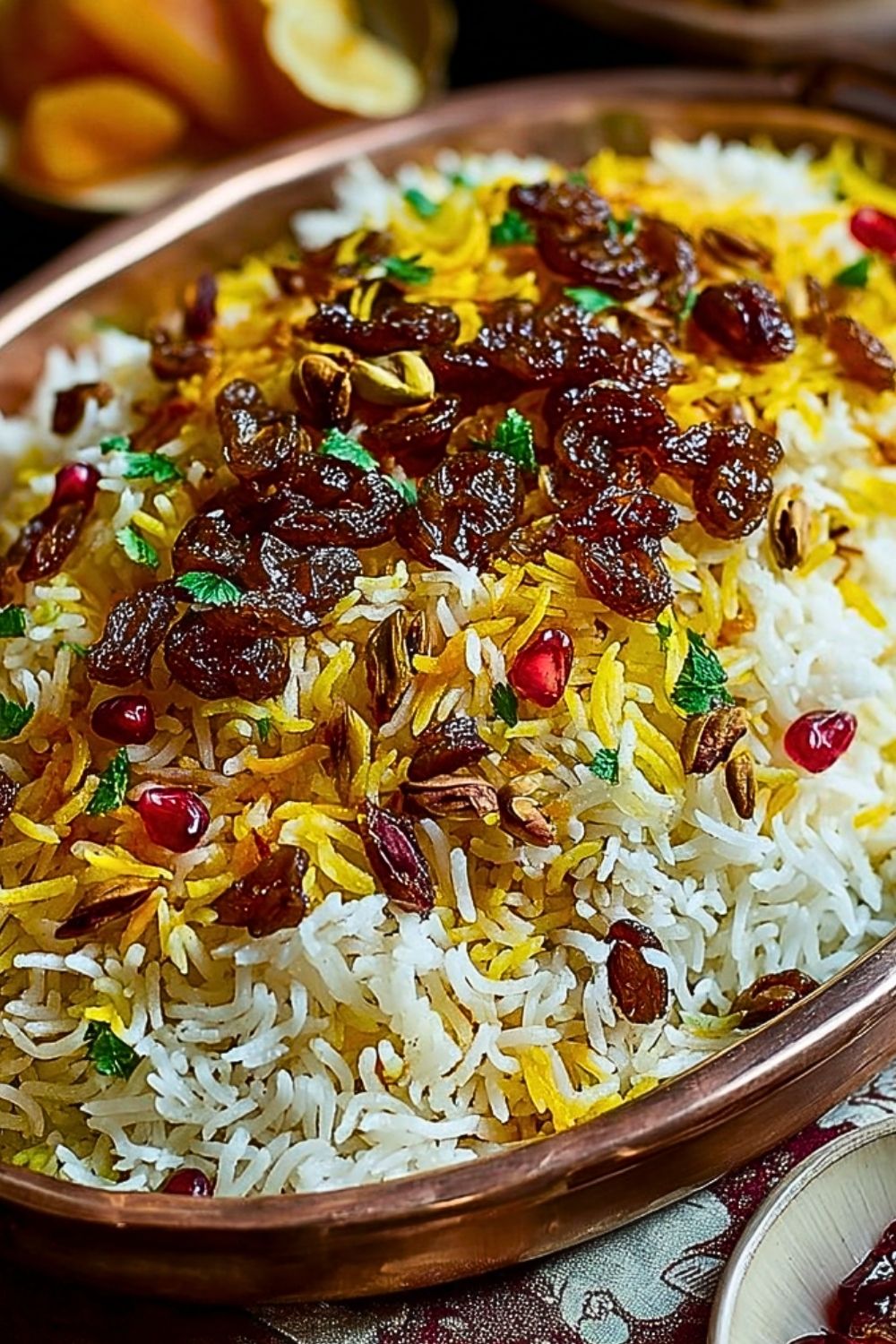
Once the rice is fully cooked, gently fluff it with a fork. Transfer to a serving platter and top with the reserved nuts, fruits, and saffron strands for a vibrant presentation. Serve warm as a festive centerpiece or elegant side dish.
Notes
Persian Jeweled Rice is a versatile dish that allows room for creativity while still honoring its rich traditional roots. You can adjust the sweetness by reducing or increasing the sugar, and the fruits can be swapped based on availability—like using dried cherries or figs. While tahdig is optional, it adds a wonderful crunch that many love. Pair it with roasted meats or stews for a complete Persian feast.
Watch Out for These Mistakes While Cooking
- Overcooking the rice: This dish depends on light, fluffy grains. Boiling the rice too long before steaming can make it mushy.
- Skipping the soaking step: This helps the rice cook evenly and prevents it from clumping.
- Burning the barberries: These berries cook quickly and can turn bitter if left unattended.
- Forgetting the layering: Mixing everything together at once can dull both the look and taste. Layering allows better flavor separation and visual appeal.
- Overloading with fruits or sugar: While it’s meant to be sweet-savory, balance is key.
Storage Instructions
Leftover Persian Jeweled Rice can be stored in an airtight container in the refrigerator for up to 4 days. Reheat it gently using a nonstick pan or in the microwave with a splash of water to restore moisture. It can also be frozen in portioned containers for up to one month. Thaw overnight in the fridge before reheating.
Estimated Nutrition (Per Serving)
- Calories: 390 kcal
- Carbohydrates: 58g
- Protein: 6g
- Fat: 15g
- Saturated Fat: 3g
- Unsaturated Fat: 10g
- Cholesterol: 5mg
- Sodium: 70mg
- Sugar: 12g
- Fiber: 3g
Frequently Asked Questions
Can I use white rice instead of basmati?
Basmati is preferred for its aroma and long grain, but any long-grain white rice can be used in a pinch—just adjust the cooking time.
What can I use instead of barberries?
Dried cranberries or sour cherries are great alternatives if you can’t find barberries.
Is Persian Jeweled Rice served as a main or a side dish?
It can be either! It’s often the centerpiece at celebrations but also pairs well with kebabs or stews.
How do I get the best saffron flavor?
Grind the saffron threads and steep them in hot (not boiling) water for 10 minutes before adding to the rice.
Can I make this dish vegan?
Absolutely! Simply replace butter/ghee with plant-based oil or vegan butter.
Do I have to make tahdig?
Tahdig is optional, but it adds an incredible crispy contrast to the soft rice. Highly recommended if time allows.
How far in advance can I prepare this dish?
You can prepare the components (toasted nuts, sautéed fruits, parboiled rice) a day ahead and assemble/steam just before serving.
What’s the best way to reheat it?
Use a nonstick pan with a lid over low heat and add a splash of water. Cover to steam and restore moisture.
Conclusion
Persian Jeweled Rice is more than just a beautiful dish—it’s a journey into Persian culinary tradition that brings both elegance and comfort to your table. With a balance of texture, color, and flavor, it’s a perfect choice for impressing guests or treating yourself to something special. Take your time with the steps, enjoy the sensory process, and celebrate every bite of this timeless classic.

Persian Jeweled Rice
- Prep Time: 20 minutes
- Cook Time: 40 minutes
- Total Time: 1 hour
- Yield: 6 servings 1x
- Category: Side Dish / Main Dish
- Method: Stovetop steaming
- Cuisine: Persian / Middle Eastern
Description
Dazzling in both appearance and flavor, Persian Jeweled Rice is a festive, elegant dish that combines the subtle fragrance of saffron basmati rice with the sweet chew of dried fruits and the crunch of nuts. A traditional centerpiece at Persian weddings and celebrations, this colorful rice is as delicious as it is beautiful. Whether you’re searching for a show-stopping side or a stunning vegetarian main, this is the perfect choice for easy dinner parties, exotic food ideas, or refined yet easy recipes for special occasions. This quick and aromatic rice dish also fits many dietary preferences, making it an excellent addition to your healthy snack or dinner ideas list.
Ingredients
2 cups long-grain basmati rice
1/2 cup barberries or dried cranberries
1/2 cup slivered almonds
1/2 cup pistachios, roughly chopped
1/2 cup dried apricots, finely chopped
1/4 cup golden raisins
1 medium carrot, julienned (optional)
1 small onion, finely sliced (optional)
2 tablespoons orange zest (fresh or candied peel)
1/2 teaspoon saffron threads, ground and steeped in 2 tbsp hot water
2 tablespoons sugar
2 tablespoons butter or ghee
1/4 cup neutral oil
Salt, to taste
Water, as needed for parboiling and steaming
Instructions
1. Rinse the basmati rice under cold water until the water runs clear. Soak the rice in salted water for 30–60 minutes.
2. Bring a large pot of salted water to a boil and add the soaked rice. Boil for 5–6 minutes until al dente, then drain.
3. Toast the almonds and pistachios in a dry pan until fragrant, then remove and set aside.
4. In the same pan, melt 1 tbsp butter and sauté the apricots, raisins, and orange zest for 1–2 minutes. Remove and reserve.
5. Add the remaining butter to the pan, then cook the barberries or cranberries with sugar for 2 minutes. Set aside.
6. If making tahdig, coat the bottom of a nonstick pot with oil and layer with thin potato slices or bread.
7. Begin layering: rice, then some of the nuts and fruits. Repeat until everything is used, reserving some for garnish.
8. Drizzle the saffron water over the top. Make steam holes in the rice with a spoon handle.
9. Cover the pot with a clean kitchen towel under the lid and steam on low for 30–40 minutes.
10. Fluff gently with a fork, transfer to a serving platter, and garnish with reserved toppings. Serve warm.
Notes
Use a clean kitchen towel under the lid to trap moisture and ensure even steaming.
Always soak the rice beforehand for the fluffiest results.
Don’t skip the saffron—it gives the rice its signature color and perfume.
Nutrition
- Serving Size: 1 serving
- Calories: 390
- Sugar: 12g
- Sodium: 70mg
- Fat: 15g
- Saturated Fat: 3g
- Unsaturated Fat: 10g
- Trans Fat: 0g
- Carbohydrates: 58g
- Fiber: 3g
- Protein: 6g
- Cholesterol: 5mg
Keywords: persian jeweled rice, wedding rice, easy rice dish, middle eastern rice, vegetarian rice, festive rice, saffron rice, easy dinner, colorful rice recipe, basmati