
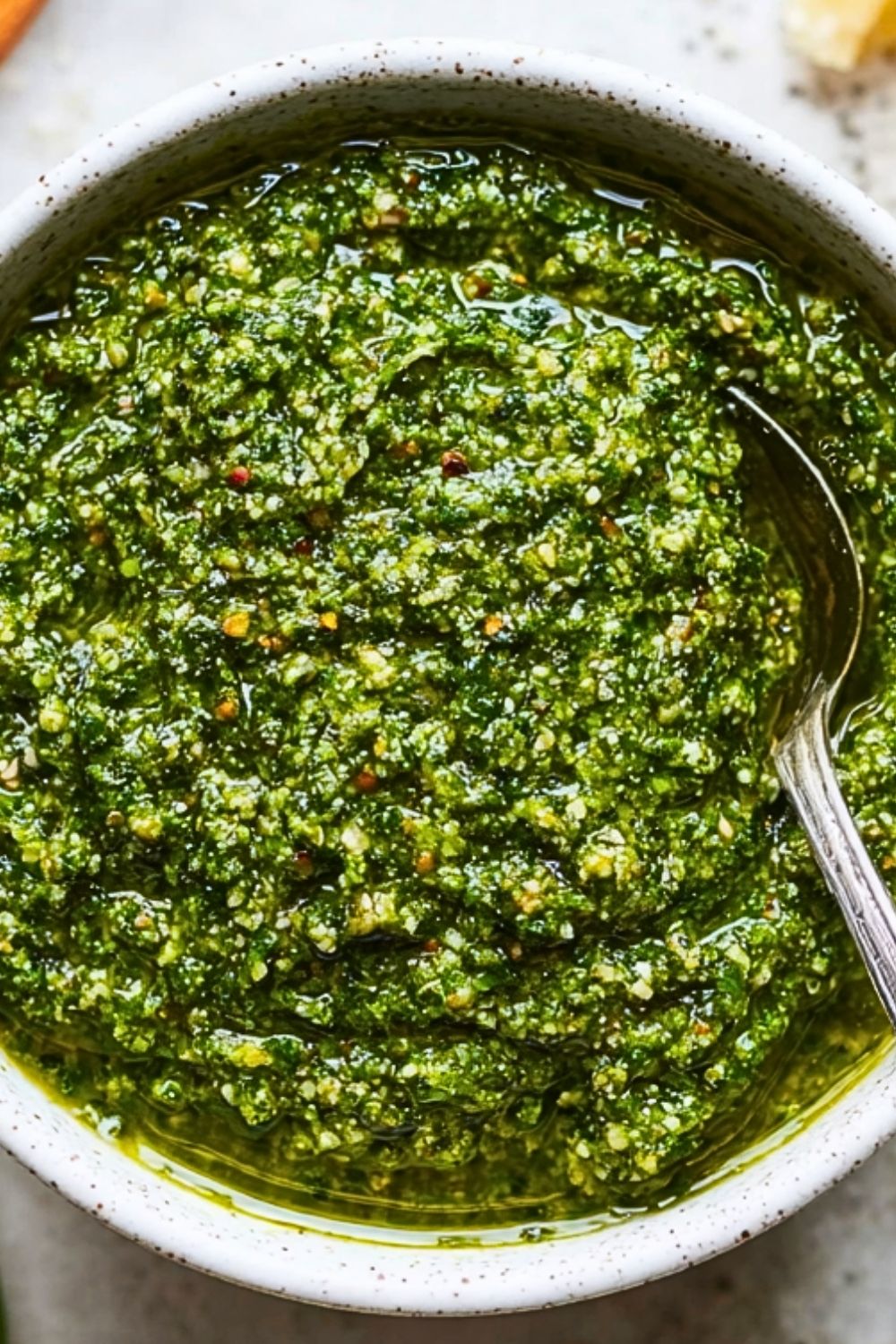
The moment I get my hands on a fresh bunch of basil, I know exactly what I’m making—basil pesto. It’s one of those timeless sauces that feels like a celebration of summer in a spoonful. The fragrant basil, nutty Parmesan, rich pine nuts, and a good splash of olive oil create a harmony that’s hard to resist. I’ve tried many versions over the years, but this recipe for the easiest basil pesto sauce is my personal go-to for flavor, speed, and versatility.
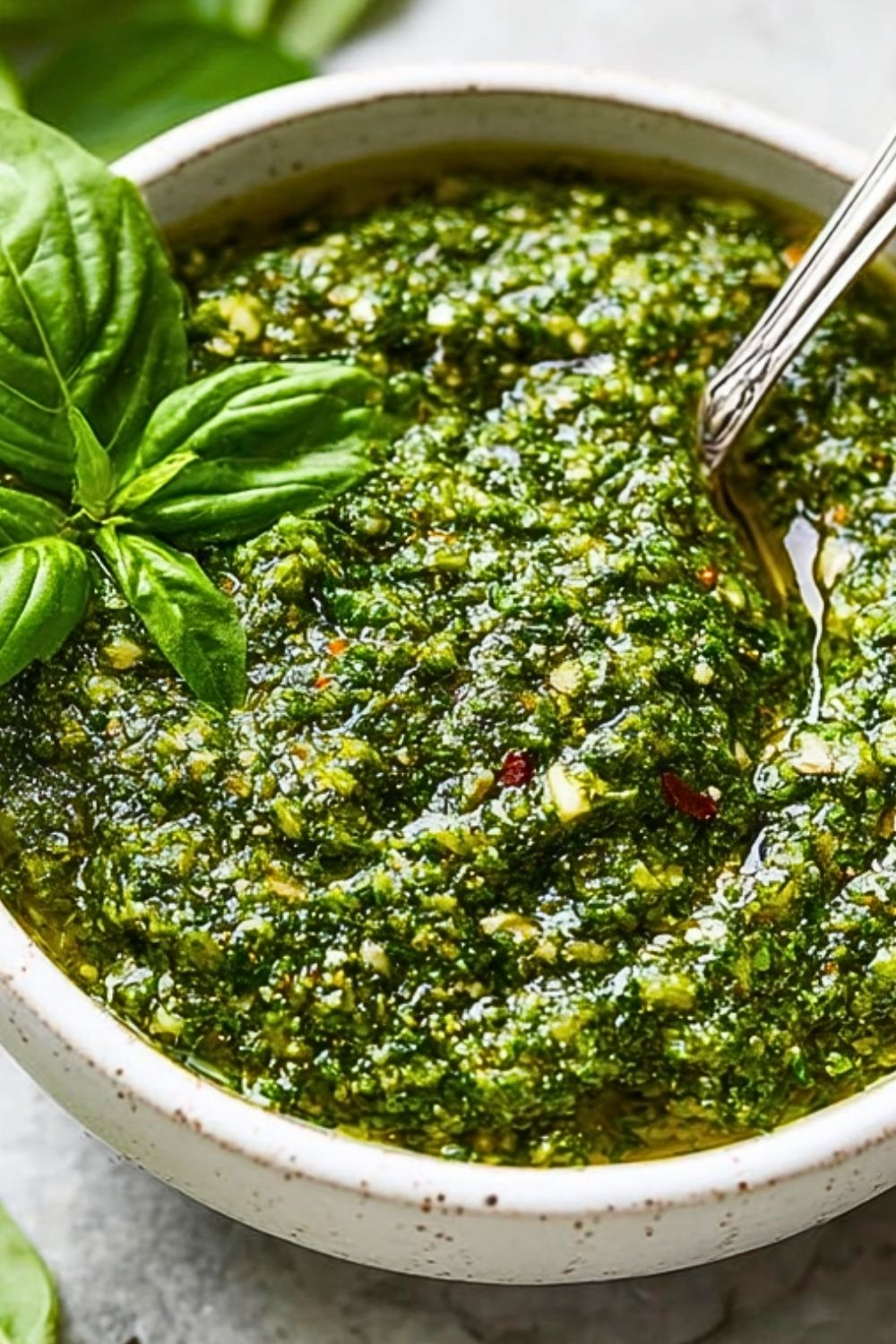
I love how quickly it comes together. Whether I need a fast pasta topper, a sandwich spread, or a drizzle for roasted veggies, this pesto is my trusty companion in the kitchen. It feels fancy, but it couldn’t be simpler to whip up. No cooking required, just a few pulses in the food processor, and it’s ready to go.
Why You’ll Love This Basil Pesto Sauce
This basil pesto is all about bold, fresh flavor with minimal effort. It’s naturally gluten-free, can be made dairy-free, and works with a variety of dishes. It freezes beautifully, so you can make a big batch and enjoy a taste of summer even in the colder months.
What Kind of Basil Should I Use?
The best basil for pesto is fresh, sweet basil. This is the classic variety you’ll find at most grocery stores or farmers markets. Avoid Thai basil or purple basil for this recipe—they have very different flavor profiles. Look for bright green leaves and avoid any that are bruised or wilted.
Options for Substitutions
- Nuts: If pine nuts are too pricey or hard to find, swap them for walnuts, almonds, or cashews.
- Cheese: For a dairy-free option, try nutritional yeast or skip the cheese entirely and boost the salt slightly.
- Garlic: Feel free to adjust the amount of garlic to taste. Roasted garlic also gives a milder, sweeter flavor.
- Oil: While extra virgin olive oil is traditional, avocado oil is a good substitute with a more neutral taste.
- Greens: You can mix basil with other greens like spinach, arugula, or even kale for a twist on the classic.
Ingredients for This Basil Pesto Sauce
- Fresh Basil Leaves: The heart of this pesto. Sweet basil gives that unmistakable fresh, aromatic flavor.
- Pine Nuts: Traditional and buttery, they lend a rich, creamy texture to the sauce.
- Parmesan Cheese: Adds salty, umami depth. Use freshly grated Parmigiano-Reggiano if possible.
- Garlic: Raw garlic gives it a sharp bite, balancing the richness of the other ingredients.
- Extra Virgin Olive Oil: Smooths and binds everything together with its fruity richness.
- Salt: Enhances and rounds out the flavors.
- Lemon Juice (optional): Brightens the sauce and helps preserve the green color.
Step 1: Toast the Pine Nuts (Optional but Recommended)
Lightly toasting pine nuts in a dry skillet over medium heat brings out their buttery flavor. Stir frequently and watch closely—they burn fast! Once golden, let them cool.
Step 2: Blend the Basil, Garlic, and Nuts
Add the fresh basil leaves, cooled pine nuts, and garlic cloves into a food processor. Pulse several times until the mixture is finely chopped.
Step 3: Add Cheese and Pulse Again
Add in the Parmesan cheese and pulse a few more times until everything is evenly combined. This step helps blend the dry ingredients before adding oil.
Step 4: Stream in the Olive Oil
With the processor running on low, slowly drizzle in the olive oil. This emulsifies the sauce and brings it to a smooth, spreadable consistency. Stop and scrape down the sides as needed.
Step 5: Season and Adjust
Add salt to taste and a small squeeze of lemon juice if using. Give the pesto one last pulse to combine. Taste and adjust salt, garlic, or lemon juice as desired.
Step 6: Use or Store
Use immediately or transfer to a jar and cover the top with a thin layer of olive oil to preserve the color. Store in the fridge or freeze in portions.
How Long to Prepare the Basil Pesto Sauce
Making basil pesto is incredibly fast and convenient, which is one of the reasons I make it so often.
Prep Time: From start to finish, the prep takes around 10–15 minutes. That includes washing and drying the basil, toasting the pine nuts (if you choose to), and blending everything together.
No Cook Time: There’s no actual cooking involved unless you toast the nuts, which adds 2–3 minutes.
Tips for Perfect Basil Pesto Sauce
- Use fresh basil only. Wilted or old leaves can make the pesto taste bitter.
- Dry your basil well. Any moisture can make the pesto watery and cause it to oxidize faster.
- Use high-quality olive oil. The flavor really comes through, so it’s worth using a good one.
- Grate the cheese fresh. Pre-shredded cheese doesn’t melt into the sauce as smoothly.
- Add oil slowly. Drizzling it in slowly while blending helps emulsify the sauce.
Watch Out for These Mistakes While Cooking
- Over-blending. It can turn your pesto into a paste. Pulse rather than blend continuously.
- Too much garlic. A little goes a long way in pesto; too much can overpower everything.
- Using damp basil. This leads to watery, dull pesto.
- Skipping the salt. Salt balances and enhances all the other flavors.
- Not storing it properly. Exposure to air makes pesto darken and lose flavor quickly.
What to Serve With Basil Pesto Sauce?
1. Tossed with Pasta
Classic and delicious—just stir into warm pasta with a splash of pasta water to coat evenly.
2. Spread on Sandwiches or Wraps
Use it as a flavorful spread for sandwiches, wraps, or grilled cheese.
3. Drizzled Over Roasted Vegetables
Adds brightness to roasted carrots, potatoes, zucchini, and more.
4. Swirled into Soups
A spoonful of pesto swirled into a bowl of minestrone or tomato soup is pure magic.
5. Mixed into Salad Dressings
Stir into a vinaigrette or creamy dressing for a basil-forward twist.
Storage Instructions
Refrigeration: Store your basil pesto in an airtight jar in the fridge for up to 5 days. To help preserve the color and flavor, pour a thin layer of olive oil on top before sealing.
Freezing: Basil pesto freezes very well. Spoon it into ice cube trays, freeze until solid, then transfer the cubes to a zip-top bag. Use within 3–4 months. Thaw in the refrigerator or stir directly into hot dishes.
Avoid Oxidation: Always use a clean spoon and minimize air exposure to prevent browning.
Estimated Nutrition (Per 2 Tablespoons)
- Calories: 190
- Total Fat: 19g
- Saturated Fat: 3g
- Unsaturated Fat: 15g
- Cholesterol: 5mg
- Sodium: 160mg
- Carbohydrates: 2g
- Fiber: 0.5g
- Sugar: 0g
- Protein: 3g
Frequently Asked Questions
What’s the best way to keep basil pesto green?
Add a squeeze of lemon juice and cover the surface with olive oil before storing to prevent browning.
Can I make pesto without a food processor?
Yes! You can use a mortar and pestle for a more traditional approach or even a blender—just be careful not to over-process.
Is pesto healthy?
Yes, in moderation. It’s packed with healthy fats, antioxidants, and fresh ingredients.
Can I freeze pesto with cheese in it?
Absolutely. Parmesan freezes well, and the flavor remains intact.
Can I make pesto nut-free?
Yes, you can leave out the nuts or substitute with sunflower seeds or pumpkin seeds.
Conclusion
Homemade basil pesto sauce is one of those kitchen staples that’s worth mastering. It’s quick, adaptable, and packed with flavor that elevates everything it touches. Whether you’re making a simple pasta or jazzing up leftovers, a spoonful of this vibrant green sauce brings everything to life. Once you make it fresh, there’s no going back to the jarred kind!
Easiest Basil Pesto Sauce
- Prep Time: 10 minutes
- Cook Time: 0 minutes
- Total Time: 10 minutes
- Yield: 1 cup 1x
- Category: Sauce
- Method: Blended
- Cuisine: Italian
Description
Bright, bold, and bursting with flavor, this Easiest Basil Pesto Sauce is the perfect solution for quick meals, healthy snacks, or easy dinner ideas. Made with fresh basil, rich olive oil, nutty Parmesan, and toasted pine nuts, this easy recipe comes together in minutes—no cooking required. Whether you’re tossing it with pasta, spreading it on sandwiches, or stirring it into soups, this fresh pesto delivers a gourmet touch with minimal effort. It’s also a great make-ahead sauce that freezes beautifully for later use. Perfect for anyone looking for fast food ideas with fresh, vibrant taste.
Ingredients
2 cups fresh basil leaves
1/2 cup pine nuts
1/2 cup grated Parmesan cheese
2 cloves garlic
1/2 cup extra virgin olive oil
1/2 teaspoon salt
1 tablespoon lemon juice (optional)
Instructions
1. Toast pine nuts in a dry skillet over medium heat until golden, stirring frequently. Let them cool.
2. Add basil, cooled pine nuts, and garlic to a food processor. Pulse until finely chopped.
3. Add Parmesan cheese and pulse again to combine evenly.
4. With the processor running, slowly drizzle in olive oil until the sauce reaches your desired consistency.
5. Add salt and lemon juice (if using), then pulse one final time. Adjust seasoning to taste.
6. Use immediately or transfer to a sealed jar, covering the top with olive oil. Refrigerate or freeze as needed.
Notes
For best flavor and color, use only fresh, dry basil leaves.
To freeze, portion into ice cube trays, freeze, then transfer to a sealed bag.
Toasting the pine nuts enhances the depth and richness of the sauce.
Nutrition
- Serving Size: 2 tablespoons
- Calories: 190
- Sugar: 0g
- Sodium: 160mg
- Fat: 19g
- Saturated Fat: 3g
- Unsaturated Fat: 15g
- Trans Fat: 0g
- Carbohydrates: 2g
- Fiber: 0.5g
- Protein: 3g
- Cholesterol: 5mg
Keywords: basil pesto, easy sauce, homemade pesto, quick pesto, healthy snack, food ideas, dinner ideas